Reviewing Watercolor Cute Llama Christmas Clipart for Stitching
As a designer who spends half my life digitizing and the other half stitching, I have learned that not every pretty image translates well to thread. We often fall in love with digital Illustrations because they look crisp on a screen, but embroidery is a tactile medium with physical limitations. Recently, I pulled up the Watercolor Cute Llama Christmas Clipart to evaluate its potential for a holiday client project. My goal was not just to admire the art, but to determine if it could survive the needle and become a viable handmade product.
The First Impression: Mood and Visual Personality
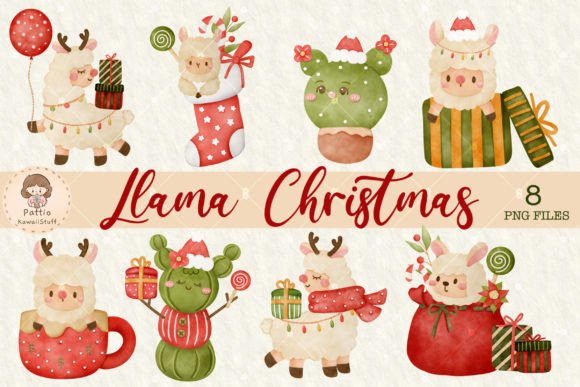
The immediate appeal of this design lies in its softness. The watercolor aesthetic brings a gentle, whimsical mood that feels perfectly suited for the holiday season without being overly aggressive or cliché. The llama, a perennial favorite in modern crafting, is rendered with a friendly demeanor that appeals to a wide demographic, from toddlers to adults who appreciate quirky decor.
From a layout perspective, the composition is balanced. However, as an experienced reviewer, I look past the colors. I examine the shapes. Watercolor styles often rely on subtle gradients and bleeding edges. In embroidery, we do not have pixels; we have stitches. The challenge here is translating those soft, organic edges into defined stitch paths. If the original clipart has too much noise or undefined boundaries, it can result in a messy finished product. This particular design appears to have distinct enough zones of color to allow for clean segmentation, which is a promising sign for digitization.
Real-World Application: A Holiday Tote Bag Scenario
To test the viability of this asset, I imagined a specific real-life scenario: creating a set of custom tote bag design options for a local boutique’s holiday gift-with-purchase campaign. The client wanted something festive but unique, avoiding the standard red and green snowflakes.
In this context, the Watercolor Cute Llama Christmas Clipart shines. Embroidered on a natural canvas tote, the whimsical nature of the llama adds a touch of personality that mass-produced prints lack. The design would likely work best as a central focal point. Because watercolor effects can be dense, I would approach this as a complex machine embroidery design requiring careful planning of thread colors. Using variegated threads could mimic the watercolor bleed effect, adding depth and making the embroidery project feel high-end and artistic rather than flat.
Apparel and Home Decor Potential
Beyond tote bags, this design has strong potential for sweatshirt embroidery. A crewneck sweatshirt provides a large, stable surface area that can accommodate the detail level of a watercolor-inspired piece. The softness of the fleece complements the gentle aesthetic of the llama. For baby embroidery, such as on a onesie or a nursery blanket, the cute factor is undeniable. However, one must be cautious. Babies have sensitive skin, so the back of the stitching must be clean, and the stitch density should not be so high that it creates a stiff, uncomfortable patch on the fabric.
For home decor, consider a pillow cover or a kitchen tea towel. On a linen pillow, the texture of the thread against the weave of the fabric can enhance the rustic, handmade feel. For tea towels, however, the design must be simplified. Towels are washed frequently and subjected to friction. A highly detailed watercolor design might lose its clarity after several wash cycles if the stitches are too fine or if the fabric texture shifts during laundering.
Technical Challenges and Fabric Considerations
While the aesthetic is charming, practical application requires addressing technical hurdles. Watercolor designs often imply a vast array of shades. In embroidery, we are limited by the number of thread changes we are willing to make. Too many color stops increase production time and the risk of thread breaks. I recommend simplifying the color palette. Choose three to five dominant thread colors that capture the essence of the watercolor look without requiring twenty different spools.
Fabric texture plays a critical role. This design would struggle on highly textured fabrics like thick terry cloth or loose-weave knits unless a heavy cut-away stabilizer is used. On stretchy fabrics, such as jersey t-shirts, the design needs to be digitized with underlay stitches that lock the fabric down to prevent distortion. Without proper stabilization, the cute llama could end up looking warped or puckered.
Another consideration is the hoop size. If you are attempting to place this on a cap or a curved surface, the design may need to be scaled down. Small details in watercolor art, such as the eyes of the llama or delicate holiday accents, can disappear or become tangled blobs of thread when reduced. Always test the design at the intended size on scrap fabric before committing to the final garment.
Enhancing Product Value and Brand Consistency
For Etsy sellers and craft business owners, the uniqueness of the design directly impacts perceived value. A generic clipart feel can lower the price point a customer is willing to pay. However, when executed well as an embroidered piece, this Watercolor Cute Llama Christmas Clipart elevates the item from a commodity to a personalized gift. It signals effort and creativity.
Using this design consistently across your small shop product line can help build brand recognition. If you specialize in whimsical, animal-themed holiday items, this asset fits seamlessly into that narrative. It also serves as excellent material for printable mockup creation. Before you stitch a single thread, you can use the digital file to create realistic previews for your online store, helping customers visualize the custom apparel or decor item.
Practical Notes for the Embroidery Designer
If you plan to use this clipart for commercial purposes, there are several steps you must take to ensure professionalism and legal safety:
- Check Licensing: Confirm whether the digital embroidery file or the original clipart allows for commercial use. Some licenses permit selling finished physical items but prohibit selling the digital design itself.
- Digitize with Care: If you are converting the clipart yourself, pay attention to stitch density. Watercolor effects often tempt designers to use dense fill stitch areas. Break these up with running stitch outlines or open spaces to keep the fabric flexible.
- Test Contrast: Create black and white mockups to ensure the design holds its shape without color. If the details vanish in grayscale, they will likely get lost in stitching.
- Select the Right Stabilizer: For light fabrics, use a tear-away stabilizer. For stretchy or dark fabrics where you might want to remove the backing completely, a heat-away or wash-away stabilizer might be preferable to maintain softness.
- Verify File Compatibility: Ensure your machine can read the specific embroidery file format provided. Common formats include PES, DST, and JEF, but compatibility varies by machine brand.
Final Verdict on Usability
The Watercolor Cute Llama Christmas Clipart is a strong candidate for holiday-themed projects, provided the designer respects the limitations of the medium. It is not a plug-and-play solution for every fabric type, but with thoughtful digitization and material selection, it can produce stunning results. It works best on stable, medium-weight fabrics where the stitch definition can be appreciated.
For commercial embroidery runs, simplify the color count to improve efficiency. For one-off personalized gifts, take the time to experiment with variegated threads to capture the watercolor spirit. Whether you are creating an embroidered patch, a festive apron, or a boutique sweatshirt embroidery piece, this design offers the charm and versatility needed to engage buyers. Just remember: the magic is in the execution. Test, adjust, and stitch with intention.