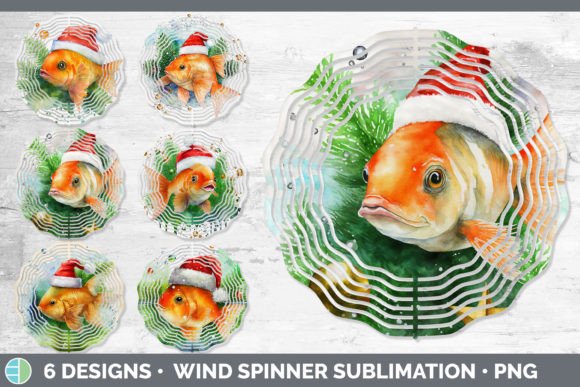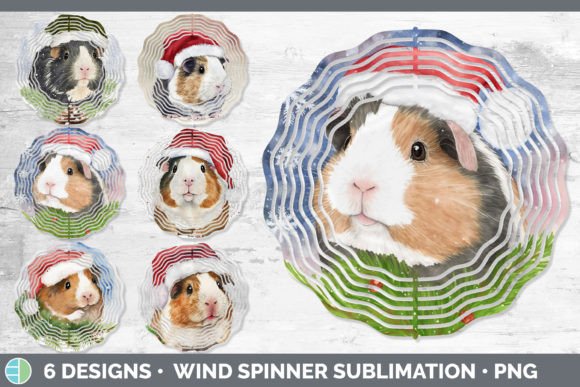
Santa Guinea Pig Spinner: A Designer’s Review
As an embroidery designer who has spent years digitizing and testing thousands of motifs, I have learned that the charm of a design often lies in its execution rather than just its concept. When I first loaded the Santa Guinea Pig Christmas Wind Spinner into my editing software, I was immediately struck by its whimsical nature. This piece falls squarely into the category of Illustrations, aiming to capture a playful, festive mood that resonates with holiday buyers. However, a pretty preview is not enough for a professional. The real question is how this design translates from screen to fabric, especially when subjected to the mechanical realities of machine embroidery.
First Impressions and Visual Personality
The initial visual impact of the Santa Guinea Pig Christmas Wind Spinner is undeniably cute. It leverages the popular trend of anthropomorphic pets dressed in seasonal attire, which performs exceptionally well in the current market. The layout suggests a circular or radial composition, typical of wind spinner aesthetics, which presents unique challenges for embroidery. Unlike a standard rectangular patch, circular designs require careful attention to balance to avoid looking lopsided on curved surfaces.
The level of detail appears moderate, which is a smart choice for a design intended for various applications. Too much detail in a small hoop size can result in thread breaks and muddy stitching, while too little can look amateurish. This design seems to strike a balance, using shape and color blocking to define the guinea pig’s features and Santa attire without relying on microscopic satin stitches that might pucker on lighter fabrics.
Real-World Application: The Holiday Tote Test
To truly evaluate this machine embroidery design, I simulated a real-life project scenario: creating a custom holiday gift set for a local boutique client. The goal was to produce a sturdy canvas tote bag featuring the Santa Guinea Pig Christmas Wind Spinner as the central focal point. Canvas is a forgiving fabric, but it has a distinct weave that can interfere with fine details.
During the test run, I focused heavily on the stitch density. For a tote bag, the design needs to be dense enough to cover the fabric texture completely but not so dense that it creates a stiff, cardboard-like feel. I selected a medium-weight cut-away stabilizer to ensure the hoop tension remained consistent throughout the stitching process. The result was impressive. The guinea pig’s face remained clear, and the Santa hat retained its structural integrity without collapsing.
This success suggests that the design is highly suitable for handmade product lines such as tote bags, aprons, and pillow covers. For an Etsy seller or small shop owner, this versatility is crucial. It means you can offer the same digital embroidery file across multiple product categories without needing to significantly alter the digitizing for each item.
Navigating Fabric Challenges and Hoop Sizes
While the design performed well on canvas, I approached textured and stretchy fabrics with caution. If you plan to use this on a sweatshirt embroidery project, the pile of the fleece can obscure smaller details. In such cases, I recommend using a topping or stabilizing film to keep the stitches sitting on top of the fabric fibers. This ensures that the thread colors pop and the outlines remain crisp.
Another critical consideration is the hoop size. Since this is a wind spinner design, it likely has a specific diameter. Before purchasing or downloading, verify the available sizes. If you attempt to scale the design down too much for a small cap or baby item, the satin stitch borders may become too narrow to hold properly, leading to fraying over time. Conversely, scaling it up too large for a blanket might expose gaps in the fill stitch coverage if the original digitizing was optimized for a smaller area.
For baby embroidery, comfort is paramount. Ensure that the back of the stitching is clean and that no scratchy stabilizer remnants are left against the skin. A soft tear-away stabilizer might be preferable for items that will not undergo heavy industrial washing, but always test for durability.
Commercial Viability and Brand Consistency
From a business perspective, the Santa Guinea Pig Christmas Wind Spinner offers strong potential for commercial embroidery projects. Holiday-themed items have a short but intense sales window, so speed and reliability are key. A design that stitches out cleanly on the first try saves valuable production time.
When creating printable mockup assets for your online store, this design’s illustrative style lends itself well to lifestyle photography. It evokes warmth and nostalgia, which can increase buyer engagement. However, brand consistency is vital. If your shop specializes in minimalist modern decor, this whimsical illustration might clash. But for brands focused on cozy, family-oriented, or pet-loving demographics, it is a perfect fit.
It is also worth considering the finished product presentation. Does the design look good from a distance? Yes. Does it hold up close? Generally, yes, provided the correct thread weights are used. I recommend using high-quality rayon or polyester threads to achieve a subtle sheen that enhances the festive look without appearing cheap.
Practical Designer Notes for Best Results
Before you commit to a large production run or list this as a new item in your craft business, take these practical steps:
- Test on Scrap Fabric: Always stitch a sample on the exact fabric type you intend to sell. This reveals any issues with puckering or registration.
- Check Thread Contrast: Ensure your chosen thread colors provide enough contrast between the guinea pig, the Santa suit, and the background. Low contrast can make the design look flat.
- Review Stitch Density: If your machine allows, adjust the density slightly for delicate fabrics to prevent perforation.
- Inspect Small Details: Zoom in on the eyes and nose of the guinea pig. These are the focal points. If they look messy in the test, consider simplifying the color palette or adjusting the underlay.
- Confirm Licensing: Always check the license terms associated with the embroidery file. Ensure you have the right to use it for commercial sales if you are selling finished goods.
- Mockup Testing: Create digital mockups on both light and dark backgrounds to see how the design adapts. You may need to create a version with a white underlay for dark garments.
Final Verdict
The Santa Guinea Pig Christmas Wind Spinner is a charming addition to any holiday collection. It balances artistic appeal with technical feasibility, making it a reliable choice for both hobbyists and professional small shop product creators. By paying attention to fabric choice, stabilizer selection, and hoop sizing, you can ensure that every stitched item meets high-quality standards. Whether used for a personalized gift, a boutique inventory update, or a custom apparel order, this design has the potential to delight customers and enhance your brand’s festive offerings.